Hawaiian Reef Etiquette: How to Snorkel Responsibly
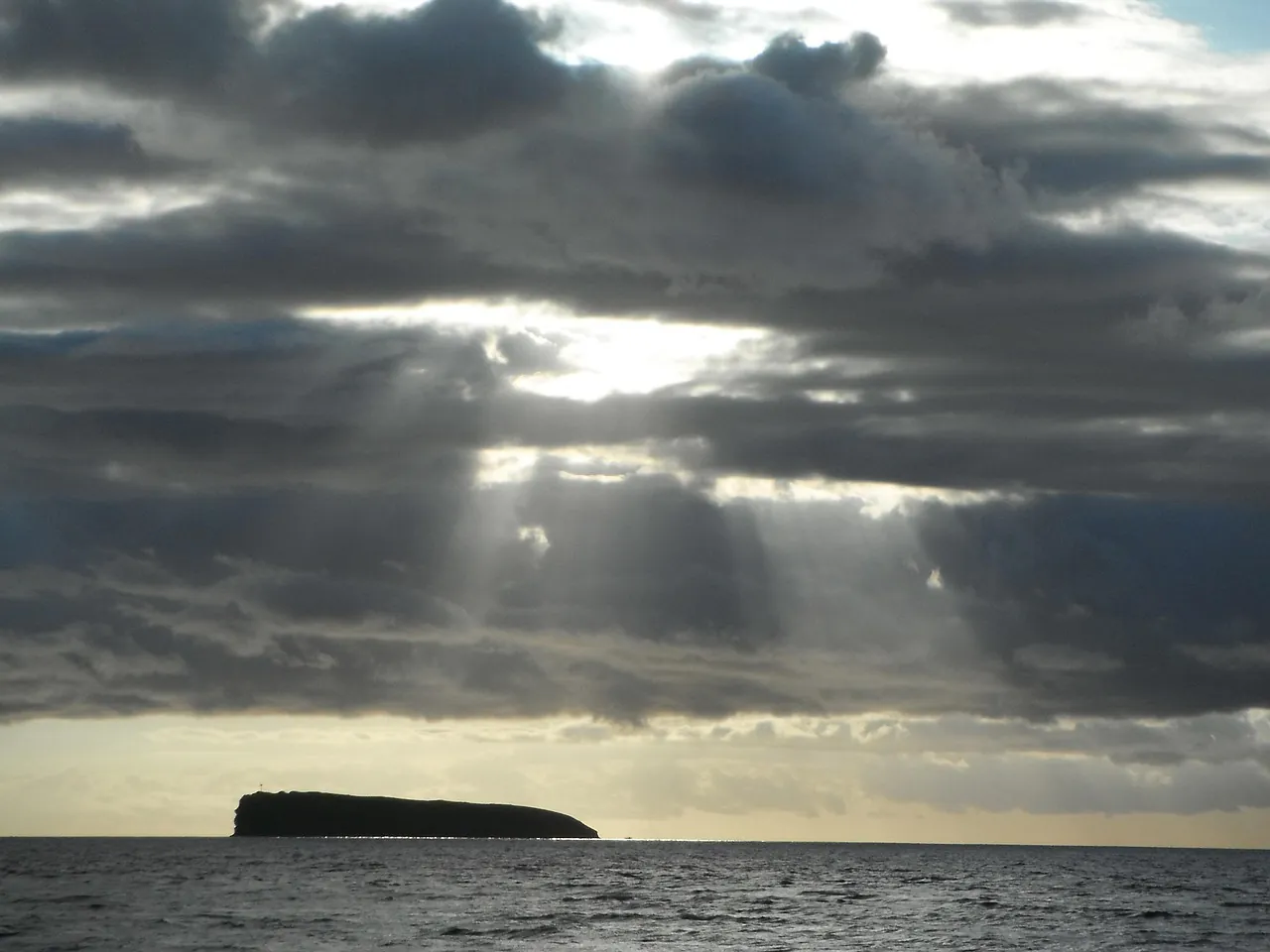
Molokini is not a swimming pool with fish in it.
The crater sits inside the Molokini Shoal Marine Life Conservation District, 77 acres of no-take water managed under Hawai’i Administrative Rules Chapter 13-31. On top of it, the 23-acre islet is a State Seabird Sanctuary. No landing. No anchoring outside the permitted day-use moorings. No collecting either, and that word legally covers coral rubble, empty shells and sand, not just live fish.
I’ve been swimming this crater since 2017, when I moved to Kīhei for a marine biology internship and never quite got round to leaving. What I’ve learned is that the rules are not paperwork. They are the only reason the water still looks the way it does.
Why Molokini Makes Etiquette Non-Negotiable
Roughly 300,000 people visit the crater every year. Between 8:00 and 10:30 AM, an average of 12 to 15 commercial vessels sit on the submerged moorings at once, which puts anywhere from 660 to more than 1,100 swimmers in the water simultaneously. Carrying-capacity surveys found that 67% of visitors reported feeling crowded by boat density alone.
So etiquette here isn’t decorative. With that many fins in one shallow bowl, the margin between a healthy reef and a scuffed one comes down to individual behaviour, repeated a few hundred thousand times a year. Every rule below exists because somebody once did the opposite and the reef paid for it.
If you want the statute-by-statute version, our visitor rules and guidelines page has it. What follows is the human version, written for the person standing on a boat deck at 6:40 AM trying to remember which sunscreen they packed.
Three Ring-Fences: Who Actually Protects This Water
Visitors conflate these constantly. At least three separate jurisdictions wrap around Molokini, and they answer to different agencies with different phone numbers. Know which one you’re floating in and the rules stop feeling arbitrary.
1. The State MLCD
Hawai’i’s Marine Life Conservation Districts are run by the Molokini is not a swimming pool with fish in it.
The crater sits inside the Molokini Shoal Marine Life Conservation District, 77 acres of no-take water managed under Hawai’i Administrative Rules Chapter 13-31. On top of it, the 23-acre islet is a State Seabird Sanctuary. No landing. No anchoring outside the permitted day-use moorings. No collecting either, and that word legally covers coral rubble, empty shells and sand, not just live fish.
I’ve been swimming this crater since 2017, when I moved to Kīhei for a marine biology internship and never quite got round to leaving. What I’ve learned is that the rules are not paperwork. They are the only reason the water still looks the way it does.
2. The Federal Sanctuary
The https://hawaiihumpbackwhale.noaa.gov/” target=”_blank” rel=”noopener”>Hawaiian Islands Humpback Whale National Marine Sanctuary, run by NOAA, covers the channels between Maui, Kaho’olawe, Lāna’i and Moloka’i. A redesignation and boundary expansion has been working its way through consultation, so check NOAA’s current maps before you quote a boundary to anyone.
3. The Seabird Sanctuary
The islet itself belongs to DLNR’s Division of Forestry and Wildlife, and wedge-tailed shearwaters nest on it. Landing requires written permits from both the US Coast Guard and DOFAW. In practice, nobody lands, nobody scrambles up the slope, and nobody flies a drone over the colony.
Different ring-fence, different phone number, same principle. Leave it alone and it keeps working. For the species-by-species detail behind these protections, see our marine life and Turtle Town guide.
Reef-Safe Sunscreen, Decoded
Maui County restricted chemical sunscreens from 1 October 2022. Only mineral filters, zinc oxide and titanium dioxide, may be sold or distributed on the island. Statewide, the sale of oxybenzone and octinoxate products has been banned since January 2023. Hawaii was the first US state to do it, and the science behind the ban is sound: those two chemicals damage coral larvae and promote bleaching at concentrations found in real bays.
Here’s the awkward part. “Reef-safe” and “reef-friendly” are unregulated marketing terms in the United States. Nobody checks them. Half the bottles with a coral logo on the front contain exactly the filters the law was written about.
| Product / Rule | What it actually says | What to do |
|---|---|---|
| Maui County ordinance (in force since 1 Oct 2022) | Only zinc oxide and titanium dioxide sunscreens may be sold or distributed on Maui | Buy on the island with confidence, or bring mineral-only from home |
| Statewide sales ban (Act 104) | Oxybenzone and octinoxate products cannot be sold in Hawai’i | Turn the bottle over and read the active ingredients panel |
| “Reef-safe” front-label claims | Unregulated in the US; a pure marketing term | Ignore the front. The back is the only label that matters |
| Onboard dispensers | Trilogy, Kai Kanani, Ali’i Nui and Sail Maui dispense mineral sunscreen at the dock or on deck | Use the free stuff. It’s usually a decent zinc formula |
| Prescription sunscreens | Medical exemptions exist under the Maui ordinance | Declare it, use it sparingly, and rinse before you swim |
A few practical notes from someone who has bought sunscreen in Kīhei more times than she’d like to admit.
- Longs Drugs in Kihei and the Safeway on South Kihei Road stock mineral formulas at sane prices (roughly $9–$16 / €8–€15 a bottle). Resort gift shops charge double for the same tube.
- Buy the thick zinc stick for your face and a lotion for everything else. Sticks last longer and don’t sting your eyes through a mask.
- Do the UPF rash-guard maths. A long-sleeve top means one thin layer of fabric instead of repeated reapplications, which means less product washing off your skin into the water column.
- Apply at least 15 minutes before you get wet, and skip the spray-on formulas entirely. Half of a spray can drifts onto the deck or onto somebody else.
The Science Behind “Don’t Touch”
Corals aren’t rocks. A coral head is a colony of tiny animals called polyps, living in partnership with symbiotic algae that supply most of their colour and much of their food. The whole arrangement is coated in a thin mucus layer that acts as sunblock, disinfectant and shield.
Now consider what a fingertip does to that layer. Skin oils disrupt the mucus. Sunscreen residue, even mineral residue, leaves a film that encourages infection. Pressure, however gentle you think it is, can crush polyps that took years to build. A coral head that took two decades to grow can be scarred by roughly two seconds of curiosity.
There’s a difference between brushing a coral head and standing up on the reef flat, and both are bad. The flat is a living pavement of cauliflower coral, finger coral and encrusting species that snaps under a fin or a bare foot. If you need to adjust your mask, find a sand channel, tread water, or kick back to the ladder. The reef is never a rest stop.
The reef does not need your hands. It never did.
Fin Etiquette: The Damage Nobody Notices
Most reef damage at Molokini isn’t caused by villains. It’s caused by a relaxed flutter kick two inches too low, and it happens in the shallows where snorkellers first enter the water.
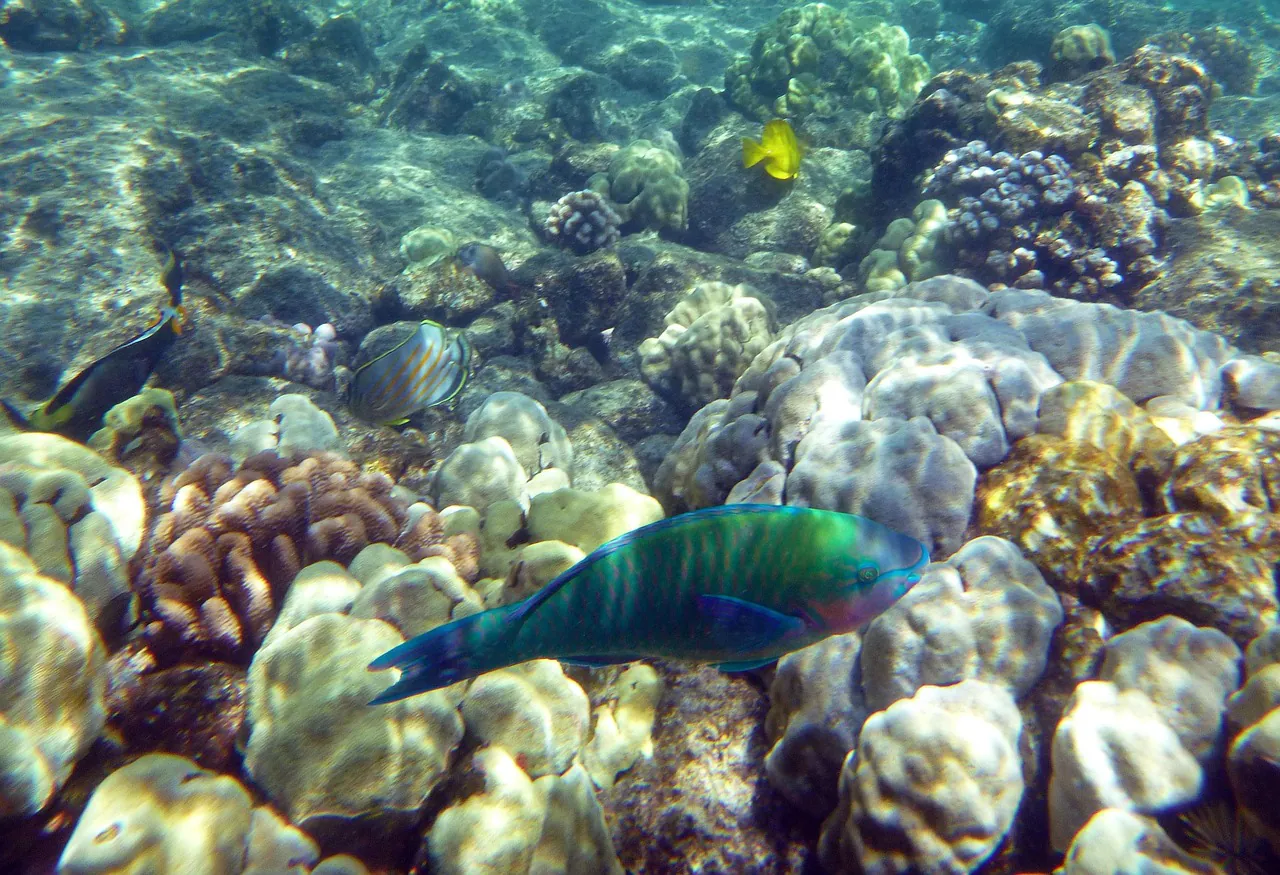
- Kick horizontally, not downwards. Downward fin strokes raise sand plumes that settle on polyps and smother them. Sand looks harmless. It isn’t.
- Stay off the bottom entirely. If your fins can reach coral, you’re too close. Keep one body length of clear blue between you and anything living.
- Never stand to adjust gear. Kneel on sand if you must, or hold the boat ladder. Standing on coral to fix a leaking mask is the single most common form of damage I see.
- Secure the dangling stuff. Cameras, GoPro poles, snorkel whistles and loose straps all drag across coral. Clip everything tight before you roll in.
- Divers: get your buoyancy sorted first. Peak-buoyancy practice on a shallow sandy site before you dive the crater wall. Middle Reef, running roughly 10 to 50 feet, is the friendliest training ground here and the place where good habits are easiest to keep.
One gear point that belongs here. Full-face snorkel masks are banned aboard Trilogy Excursions and PacWhale Eco-Adventures, and the reason is serious: CO2 can accumulate inside the mask and trigger rapid onset pulmonary edema, a genuine fatality risk. Bring or rent a standard two-piece silicone dry-snorkel mask instead. If you’re a nervous first-timer, our Maui snorkelling safety primer walks through the rest of the kit.
Wildlife Distances: The Exact Numbers
“Give them space” is useless advice because nobody knows how much. Here are the actual legal distances in Hawai’i waters, in feet and metres, so you can judge them with your own eyes before you get wet.
| Species | Legal distance | Practical note |
|---|---|---|
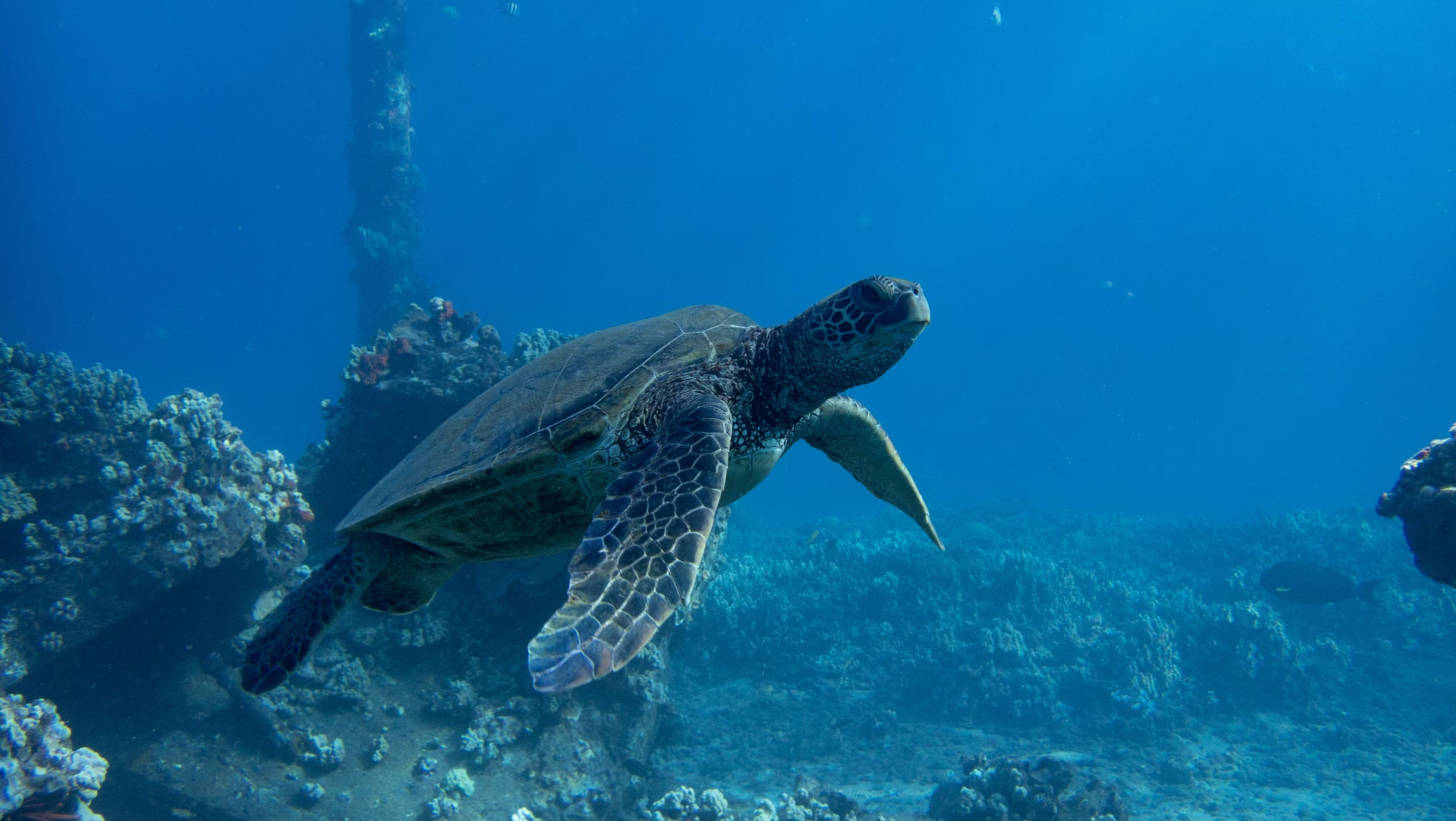
| Green sea turtle (honu) | 10 ft / 3 m | No chasing, no riding, no blocking the surface path. They need to breathe |
| Hawaiian monk seal | 50 ft / 15 m | Hauled-out seals on any beach mean stay back and keep dogs away |
| Spinner dolphins | 50 yards / 46 m | Don’t swim toward a pod. Cut engines gently and let them decide |
| Humpback whales | 100 yards / 91 m for boats and swimmers; 1,000 ft for aircraft | December through April. Swimmers must not approach, period |
| Reef fish and invertebrates | No touching at any distance | Don’t corner fish, don’t plug cave exits, don’t hand-feed |
What happens when the animal closes the gap? Hold your position and let it pass. It feels counterintuitive to stay put when a 300-pound honu is swimming towards you, but unplanned retreats end in fin damage and panicked breathing. Dolphins and turtles are curious. They make the approach, you make the room.
One honest correction to the brochure: green sea turtles are rarely at Molokini itself. The crater’s inner reef is a fish and coral site. The reliable honu encounters happen at Turtle Town, the stretch off Maluaka Beach, which most Kihei combo tours add as a second stop. Details are on our marine life page.
Mālama kai means to care for the sea, and on Maui it isn’t a slogan printed on a tote bag. It’s the operating instruction. If you take one habit home from this trip, take the habit of leaving water exactly as you found it.
No Feeding, No Gloves, No Souvenirs
These are the habits that get quietly punished, either by a fine or by an operator who won’t have you back on board.
- Don’t feed anything. Bread, peas and frozen corn all alter fish behaviour, spread disease and teach reef species to mob snorkellers. The damage compounds over a season.
- Leave the dive gloves on the boat. Gloves are legal to own and useful in cold water, but in a no-take zone they read as intent to handle. Many Molokini crews simply ask you not to wear them, and they’re right to.
- Nothing comes home. Coral rubble, shells, black sand, dead urchin tests: all of it is illegal to take from an MLCD, and “it was already dead” is not a defence. A dead coral skeleton is still reef structure and still habitat.
- Don’t touch anything metallic on the seabed. Live WWII munitions remain on the seafloor around Molokini. Follow DLNR’s three R’s: recognise, retreat, and report to 911 plus the DOH HEER office on 808-586-5815. Say it to your buddy during the safety briefing.
Responsible Photography and the Drone Reality
Photographers make up a decent share of the crowd at the crater, and the etiquette here mostly concerns what you do with your hands.
No flash on marine life. It stresses fish, and it flattens every colour you flew here to see. No selfie sticks jabbing into coral to get a better angle. If you can’t reach the frame, kick a metre back and try again; buoyancy gets the shot, hands ruin it. And shoot in the morning window. Between roughly 7:00 and 10:00 AM, before the trade winds pick up and the surface chop builds, visibility at Molokini often runs 100 to 150 feet. That’s the light you want, and it’s also the quietest water. More tips are on our photos and viewpoints page.
Then there’s the drone. The islet is a seabird sanctuary, and a quadcopter buzzing a wedge-tailed shearwater colony is harassment, not content. Whales cannot be approached closer than 1,000 feet by aircraft of any kind between December and April, and commercial drone work in state waters needs a permit. Even where it’s technically legal, flying over a protected nesting island to get a shot for your feed is a poor trade. Take the aerial shot from the boat, on the way out, with the crater behind you.
Don’t Be the Crowd: Choosing Boats That Respect the Crater
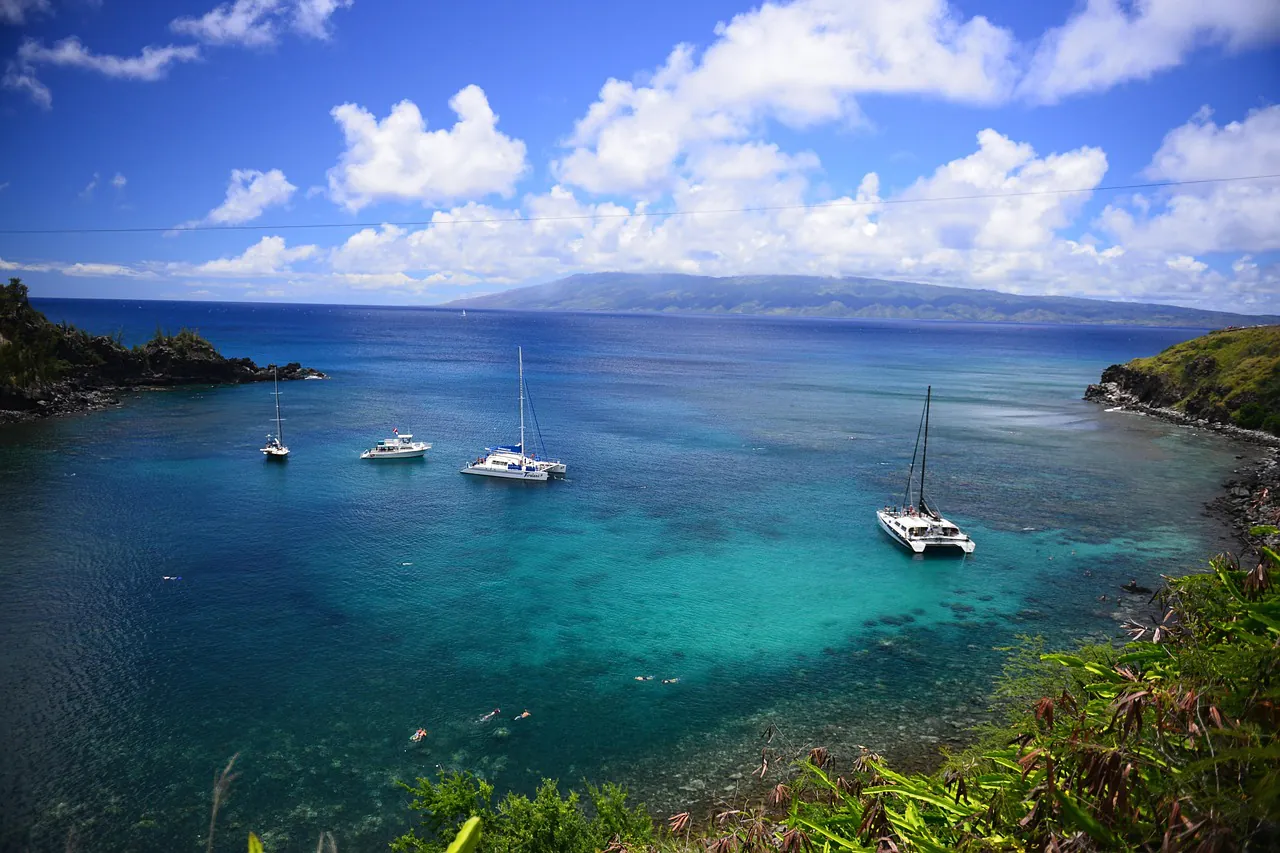
Mooring rules cap every vessel at a 2.5-hour maximum stay inside the district, and private recreational boats are barred from vacant commercial day-use moorings during the 7:30 to 9:30 AM peak. That structure means there are three genuinely quiet windows, and picking one is the single best ethical and practical decision you’ll make.
- Window one, the pre-armada dawn slot (6:15–7:45 AM). The earliest South Maui departures reach the crater 45 to 60 minutes before the Maalaea catamarans finish their 9.5-nautical-mile crossing. Kai Kanani’s Sunrise Deluxe takes 15 minutes from Maluaka Beach and is usually the first hull inside. Island Style Diving is often the first scuba boat down.
- Window two, the late-morning turnover (10:15–11:45 AM). The 7:00 and 7:30 AM catamarans have to leave by around 9:45–10:15 AM to reach Turtle Town and serve lunch. That opens a quiet hour with only one to three boats on the moorings. Late-riser expresses run $99–$147 / €90–€135 and include https://www.viator.com/tours/Maui/Molokini-
Molokini is not a swimming pool with fish in it.
The crater sits inside the Molokini Shoal Marine Life Conservation District, 77 acres of no-take water managed under Hawai’i Administrative Rules Chapter 13-31. On top of it, the 23-acre islet is a State Seabird Sanctuary. No landing. No anchoring outside the permitted day-use moorings. No collecting either, and that word legally covers coral rubble, empty shells and sand, not just live fish.
I’ve been swimming this crater since 2017, when I moved to Kīhei for a marine biology internship and never quite got round to leaving. What I’ve learned is that the rules are not paperwork. They are the only reason the water still looks the way it does.
Photo by Alashbrook on Pixabay