Molokini Crater is one of the finest snorkel sites in the Pacific. It is also, honestly, a poor place to meet a sea turtle. Both things are true, and once you understand why, you will plan a far better trip than the person next to you on the boat.
Every week I watch someone climb back onto a raft at Maalaea, mask still fogged, asking the crew where the turtles were. They paid $200 USD (roughly €185) for a Molokini-only trip and assumed the honu came with it. Nobody lied to them, exactly. The brochure just leaned hard on the word “abundance” and let them fill in the blanks. So let me fill them in properly: where the green sea turtles actually live on this coast, which fish you will genuinely see inside the crater, how the Kihei combo boats stitch the two together, and what the law expects of you once you are in the water.
I have snorkelled Molokini in flat July glass and I have clung to a dive line in February chop. I have also spent a lot of mornings at Maluaka Beach, which is where the turtles are. Keep those two facts side by side and the rest of this page makes sense.
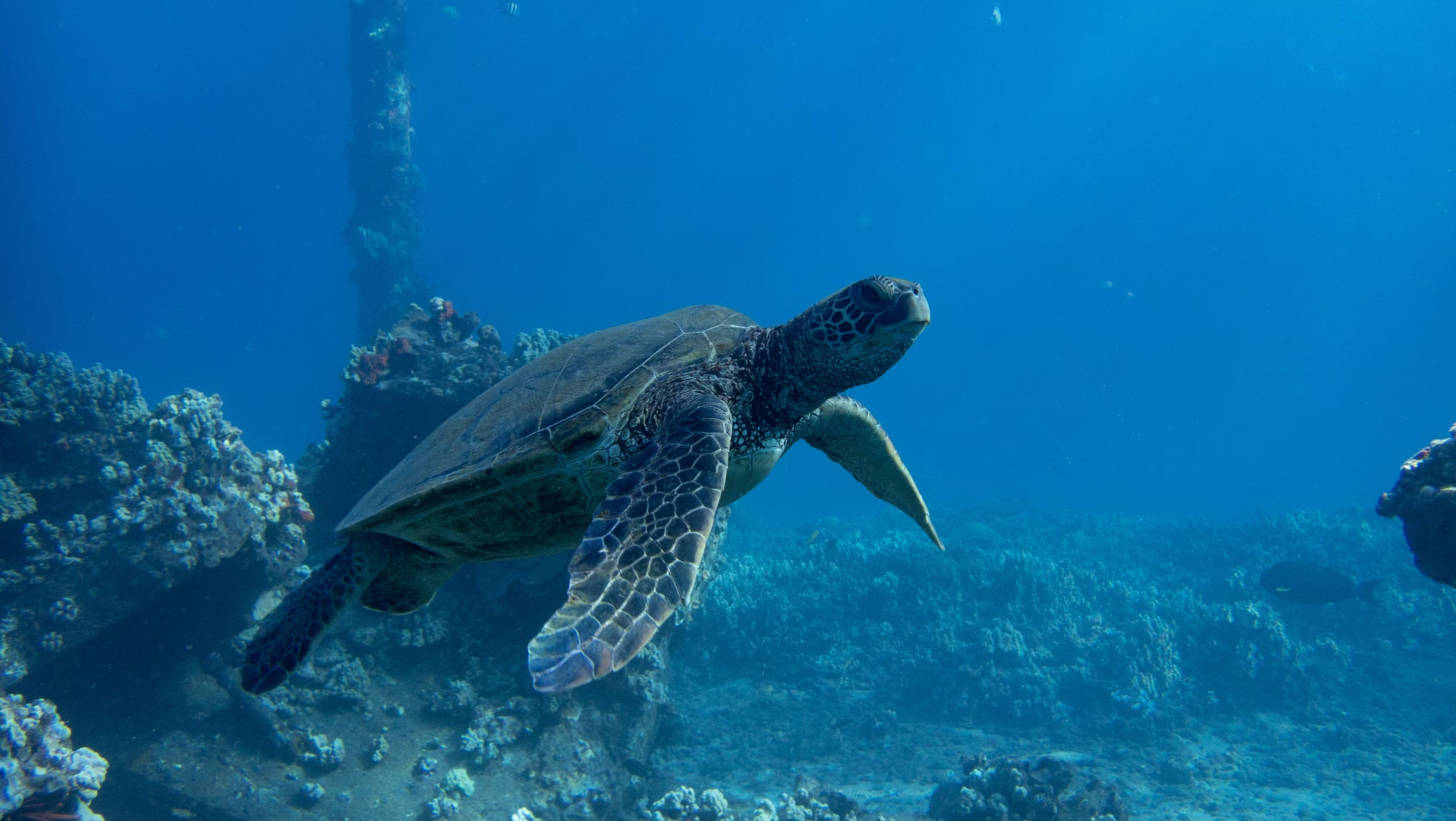
Why Molokini Is Not a Turtle Site (and Makena Is)
Molokini is a tuff cone: ash and rock welded together by steam, sitting in the Alalakeiki Channel roughly 2.5 miles off the Makena coast. Its inner wall drops away steeply, and on the outer rim the seabed plunges to somewhere between 300 and 360 feet. That geometry is exactly why the visibility is so absurd. Deep, clean, current-swept water holds very little sediment, which is why photographers call it gin-clear and why the crater photographs like a swimming pool.
Green sea turtles want the opposite conditions. They are coastal grazers, and their diet is limu, the soft algae that grows on shallow lava shelves where sunlight reaches the rock. A turtle needs a lawn. Molokini offers a cliff face, coral heads and open blue water. No limu pasture, no resident honu population. It really is that simple.
Molokini gives you clarity and depth. Makena gives you turtles. Anyone selling you both in the same cove is selling you a boat ride, not a guarantee.
That said, turtles are not extinct at the crater. They are just visitors, not residents. I have seen a single large green turtle cruising the sand channel at Middle Reef on maybe three out of forty trips, and every time the whole boat lost its collective mind. Treat any crater honu as a bonus sighting. Do not build your morning around it, and definitely do not book a Molokini-only trip on the strength of a turtle photo on a website banner.
If you want the reliable version, you need a tour that stops twice. The details of who runs those, and how the timing works, are further down this page. If you are still deciding between the crater and the coast entirely, my snorkelling and diving guide compares the zones properly.
The Species Roster: What You Actually See at Molokini
“Abundant marine life” is a phrase that tells you nothing. Here is the concrete list, drawn from my own dive logs and cross-checked against the species accounts maintained by NOAA Fisheries for the Hawaiian Islands. Sightings vary by season, depth and swell, but these are the animals that show up again and again.
| Species | Where You Find It | Depth Band | Who Sees It |
|---|---|---|---|
| Yellow tang (lauʻipala) | Middle Reef coral heads, Enenue Side | 10–40 ft | Snorkellers, always |
| Black triggerfish (humuhumunukunukuāpuaʻa) | Rubble edges and reef gaps | 5–50 ft | Snorkellers |
| Moorish idol (kihikihi) | Outer reef slopes, pairs | 20–80 ft | Snorkellers, divers |
| Raccoon butterflyfish (kīkākapu) | Throughout the inner cove | 5–40 ft | Snorkellers |
| Hawaiian hogfish (enenue) | Sand-and-coral margins | 15–60 ft | Divers |
| Octopus (heʻe) | Tako Flats, under coral rubble | 15–40 ft | Sharp-eyed snorkellers |
| Whitetip reef shark | Shark Condos, resting on sand | 50–130 ft | Divers |
| Grey reef shark | Reef’s End, cruising the current line | 40–120 ft | Advanced divers |
| Manta ray (hāhālua) | Open water beyond Tako Flats | 20–60 ft | Divers, lucky snorkellers |
| Black coral | The Back Wall, vertical faces | 90–360 ft | Divers only |
Two honest caveats. First, parrotfish (uhu) and the invasive taʻape are both present in the crater, but their numbers swing with fishing pressure and season, so I would not promise you a wall of uhu on any given morning. Second, if a guide shows you “black coral” in fifteen feet of water, you are looking at a black-coloured zoanthid, not the real thing.
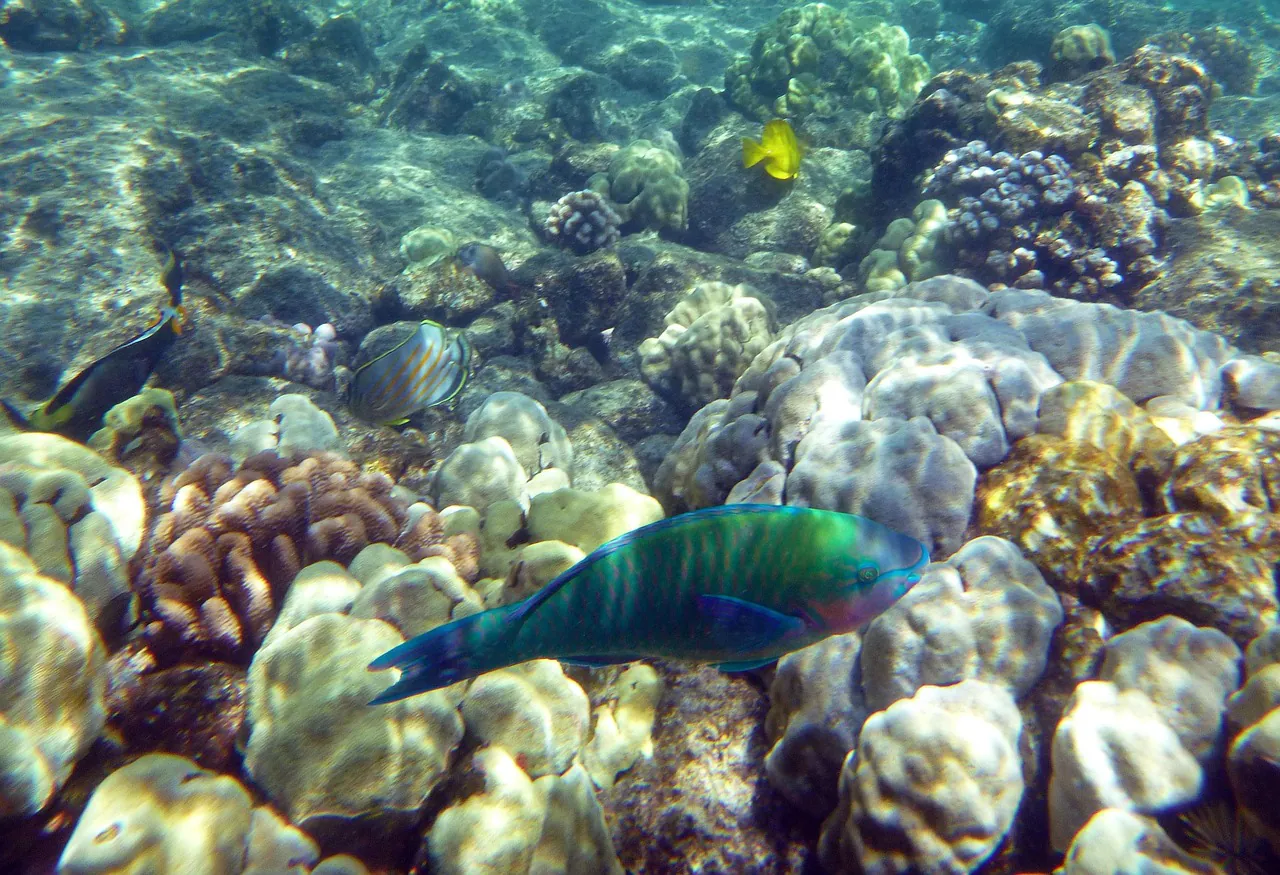
The Eight Subzones, Zoologically Mapped
Molokini is not one reef. It is a ring of eight distinct habitats, and each one holds different residents. Most tours moor at Middle Reef and call it done, which is a bit like visiting a city and only seeing the airport. Here is which animals sit where, and what that means for your mask versus your tank.
| Subzone | Depth | Signature Wildlife | Access |
|---|---|---|---|
| Middle Reef | 10–40 ft | Yellow tang, butterflyfish, cauliflower coral | All snorkellers |
| Tako Flats | 20–50 ft | Octopus, manta rays foraging | Strong snorkellers and divers |
| Enenue Side | 15–45 ft | Hogfish, finger coral, reef fish schools | Snorkellers |
| Reef’s End | 40–120 ft | Grey reef sharks, jacks | Advanced divers with a drift boat |
| Shark Condos | 60–130 ft | Whitetip reef sharks resting on sand | Divers |
| The Back Wall | 60–360 ft | Black coral, manta rays, pelagics | Certified divers only |
| Flying Sea Cliffs | 30–90 ft | Rudderfish and boarfish in shade lines | Divers |
| Edge of the World | 100 ft plus | Open-ocean visitors, tuna, wahoo | Technical and experienced divers |
Reef’s End and the outer wall carry genuinely sweeping current, and I would not swim them without a dedicated drift boat and a guide who knows the tide. If that sentence makes you nervous, good. The safety and shark facts page covers current, buddy systems and what to do when the channel picks up, and it is worth ten minutes before you book anything.
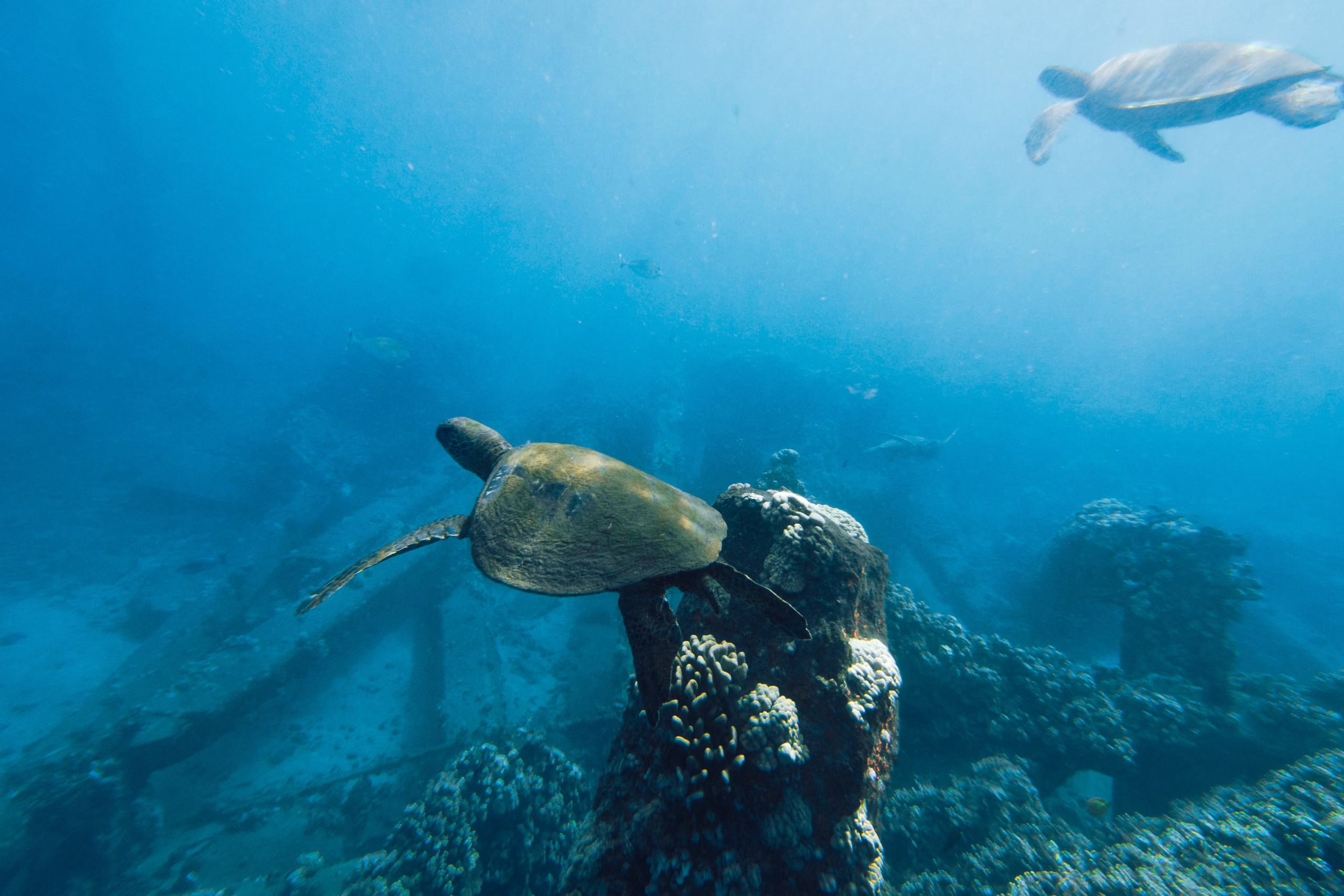
Meet the Honu: Green Sea Turtles, Properly Explained
Hawaiian green sea turtles are a conservation success story, and that is not marketing fluff. Numbers along the South Maui coast have climbed steadily since full protection in the 1970s, to the point where Maluaka now delivers honu on the overwhelming majority of calm mornings. Adults reach roughly 300 to 400 pounds and can live past sixty years. They graze algae, bask on warm sand, and sleep wedged under lava ledges.
They are also federally protected under the Endangered Species Act, and Hawaii adds its own layer through the State DLNR Division of Boating and Ocean Recreation. The practical rule is simple: no touching, no chasing, no riding, no blocking a turtle’s path to the surface. Keep a minimum of 10 feet, and honestly, 15 is better. Harassment is a legal offence, not a manners issue, and enforcement does happen when wildlife violations get reported.
- Never position yourself between a turtle and open water. They need a clear line up to breathe.
- Stay off the sand patches where turtles rest. Fins and hands do damage you cannot see from above.
- No flash photography at close range. It stresses animals and it ruins your shot anyway.
- Reef-safe mineral sunscreen only. Chemical filters damage coral, and several Maui beaches now expect it.
- If a turtle approaches you, hold still and let it pass. Do not turn and swim alongside.
The broader etiquette picture, including what “reef-safe” actually means on a label, is set out in my Hawaiian reef etiquette guide and in the visitor rules page. Short version: your behaviour in the water is the single biggest thing you control out there.
Turtle Town Decoded: What It Is, and Where
Turtle Town is a marketing label, not a place on any official chart. In practice it refers to the lava shoreline and reef system running from Makena Landing south to Maluaka Beach, where the seafloor is a tumble of basalt boulders, coral heads and sand channels. That structure gives turtles exactly what Molokini lacks: shallow, sunlit grazing ground and plenty of ledges to rest beneath.
You will also see the same water sold as “Turtle Arches,” which is Pacific Whale Foundation’s branding for a stretch of the identical South Maui reef. Two names, one coastline. Do not pay extra for the word “arches.”
If you book a “Turtle Town” trip, check the departure harbour, not the name. A 5:45 AM beach loading at Maluaka puts you on the reef in minutes. A 7:30 AM Maalaea catamaran adds a 40-minute crossing before anyone gets wet.
Turtle Town for $0.00: Shore-Entry Sites That Beat the Boat
Not many visitors realise the second stop of a $216 USD (~€200) combo tour is a beach anyone can walk into. Maluaka Beach is the literal Turtle Town, and if you have a mask and a car, you can snorkel it for nothing. This is not cheapskating advice. It is conservation advice: fewer boats on the reef means less anchor damage and less stress on the animals.
| Shore Site | Address | Honu Odds | Parking |
|---|---|---|---|
| Maluaka Beach | 5400 Makena Alanui | Very high on calm mornings | Free lot, full by 8:30 AM |
| Makena Landing | 5425 Makena Road | Very high, best on the south side | Free, small, tight turns |
| Ulua Beach | 1060 Wailea Alanui Drive | Moderate, more reef fish than turtles | $10 USD/day non-resident |
| Kahekili (Airport) Beach | 200 Kahekili Highway | Moderate, good coral cover | Free roadside |
Gear is the only real cost. Kihei rental shops charge around $15 to $20 USD per day for a mask and snorkel set, or $45 to $60 USD for the week. Resort kiosks run $25 to $35 USD daily for the same kit. Watch for the “$1.50 per day” signs along South Kihei Road: that mask is a leaking PVC prop designed to upsell you into a $40 silicone set, and some of those vouchers come bundled with a 90-minute timeshare pitch that eats a prime morning. Non-resident parking at the Kamaole beach parks costs $10 USD/day, with resident-only stalls before 10:00 AM on weekends and holidays.
How Kihei Combo Tours Actually Work
The Kihei raft boats solve the turtle problem with geography. Rather than crossing from Maalaea and committing to one site, they launch from the Kihei Boat Ramp at 2800 South Kihei Road, where parking is free in the upper lot, and build a two-stop morning out of a five-nautical-mile run.
- Check in at the Kihei Boat Ramp between 6:10 and 6:45 AM. Free parking, restrooms and showers on site; the lower lot is trailers only.
- Fifteen to twenty minutes across the channel to Molokini. Rafts reach the crater well before the 9.5-mile Maalaea catamaran fleet finishes its crossing.
- Forty-five to sixty minutes snorkelling the inner reef, usually Middle Reef or the Enenue Side.
- A short coastal run north-west to the Makena reef system, where the boat drifts over Turtle Town for the turtle half of the morning.
- Back at the ramp by late morning, before the trade winds funnel across the isthmus.
Prices for that combination sit between $193 and $216 USD (roughly €180 to €200), and the value is straightforward: one ticket, two completely different reef ecosystems, and a fraction of the transit time. One example worth looking at is a small-group Molokini and green sea turtle adventure departing Kihei at around $199 USD. A longer option with a genuine third stop is the three-hour Molokini, La Perouse and Turtle Town snorkel, though note that one is not recommended for pregnant travellers.
Two things nobody mentions at the booking desk. High-speed rafts prohibit pregnant passengers, anyone with recent surgery or chronic back and neck conditions, and passengers over 300 lbs on some operators. You will also be climbing a vertical ladder in swell. If that is not your morning, book a ramp-boarded catamaran from Maalaea instead and accept the longer crossing. The full comparison of harbours, check-in times and parking sits on the transport page.
Whales, Eels and the Season You Did Not Plan For
Between roughly December and April, the Alalakeiki Channel fills with humpback whales. Mothers and calves use the sheltered water between Maui, Kahoʻolawe and Lānaʻi, and on a good January crossing you will stop the boat twice to watch breaches before you even reach the mooring. Certified operators maintain a 100-yard approach distance and 1,000 feet for a mother and calf, and a captain who cuts that corner is not one you want driving your raft.
Eels are the year-round quiet thrill. Watch for moray heads poking from coral crevices and the smaller conger eels in rubble. Roddy’s story opposite: do not stick a hand into any hole, however tempting the antennae look. Morays bite, and the resulting infection is worse than the bite.
One last thing on interpretation. According to the statutory rules governing the Molokini Shoal Marine Life Conservation District, published in the Hawaii Administrative Rules Chapter 13-257, vessels are capped at 2.5 hours on a day-use mooring and overnight anchoring is prohibited. That cap is why your boat leaves when it leaves. It is also why learning the reef from shore, on your own time, is such a reasonable complement to a boat morning. Pacific Whale Foundation’s conservation programmes are a good place to read up on the species you are about to meet.
Keep Reading Before You Book
In the Water
Zones, depth, visibility and skill levels for both the crater and the Makena reef are covered in the snorkelling and diving guide. Start there if you are choosing between sites.
Before You Go
Timing, cost ranges and half-day versus combo decisions sit on the plan your visit page. Wildlife distance rules and sunscreen requirements are on visitor rules.
Book the early boat if you want the crater to yourself. Book the combo if you want turtles. And whichever you choose, leave the reef exactly as you found it, because the honu were here long before the rafts were.