Dawn Light Inside a Flooded Volcano
Six-forty in the morning, and the water inside Molokini is doing that thing it does. Glass. Flat, gin-clear, and so still that the moored catamarans look pasted onto a photograph. This is the hour I keep coming back for, and it’s an hour most visitors never see, because the first Maalaea boats don’t finish their 9.5-nautical-mile crossing until well after eight.
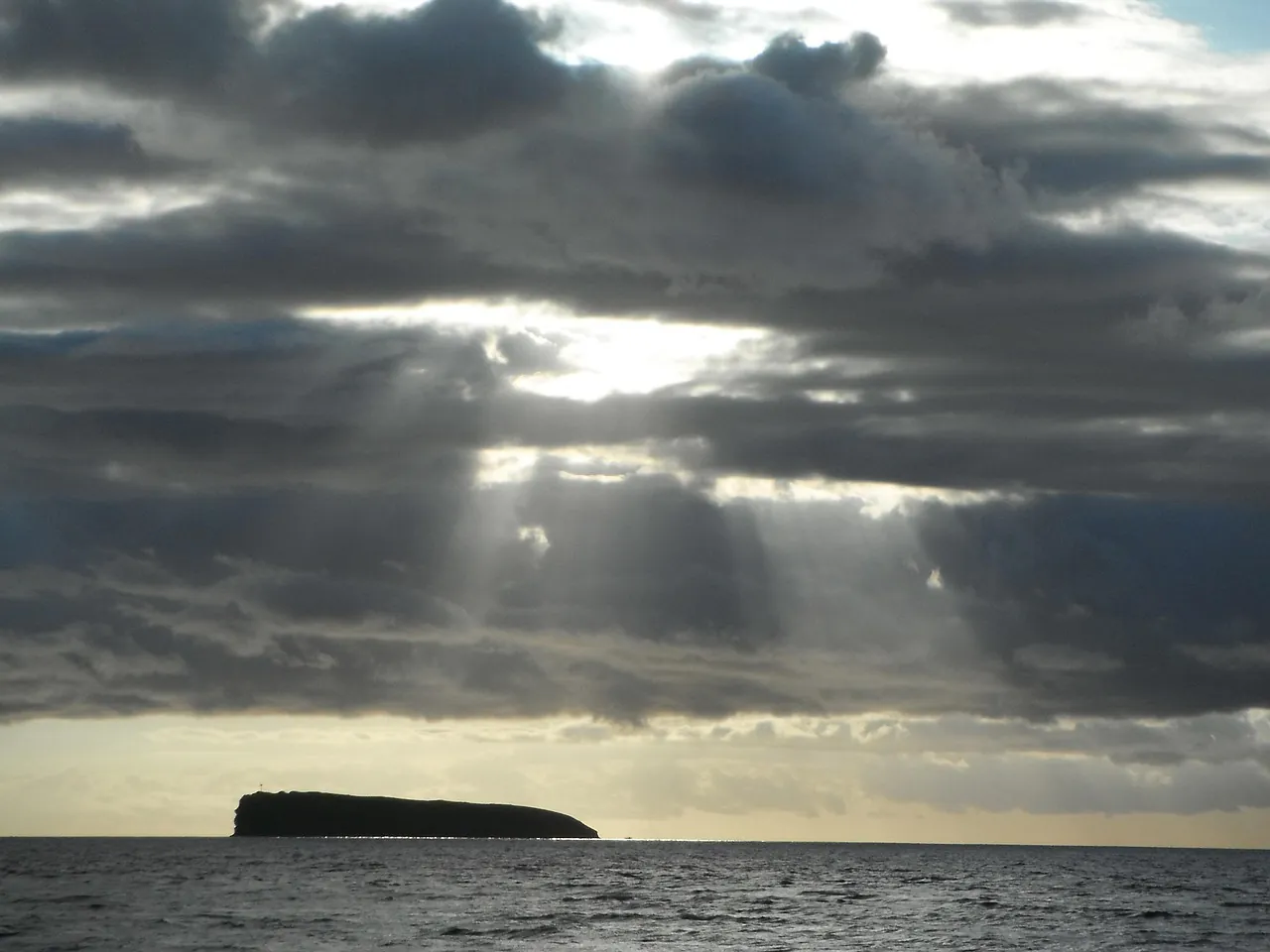
Molokini isn’t a reef at all. It’s the eroded horn of a volcanic tuff cone that stopped erupting roughly 230,000 years ago, and the crescent you photograph from the Kīhei shoreline is only the northern rim of a caldera that is now half-drowned. Since 1977, the surrounding 77-acre shelf has held Marine Life Conservation District status under Hawaii Administrative Rules Chapter 13-31, which is why the fish are unusually tame and why the Hawaiʻi Division of Aquatic Resources watches mooring behaviour so closely. Our formation and history guide handles the geology properly if that’s your thing.
So set expectations honestly before you spend anything. A seat out here runs $99 to $309 (roughly €91 to €285) depending on vessel, duration and whether breakfast is involved. What you buy at that price is depth, clarity and space, not a shallow aquarium. Hardly anyone tells you that on the booking page.
Molokini’s Underwater Map: Eight Zones Inside One Crescent
Divers talk about Molokini as though it were one site. It isn’t. The crater holds at least eight recognised zones, and which one you end up floating over is decided entirely by the boat you booked, not by you. Here’s the map I wish someone had handed me in 2017.
| Zone | Position in the crater | Typical depth | Who it suits |
|---|---|---|---|
| Middle Reef | Inner cove, west-centre | 10–50 ft (3–15 m) | First-timers, SNUBA, nervous snorkellers |
| Tako Flats | Inner cove, sandy flats | 20–80 ft (6–24 m) | Intermediate snorkellers, newly certified divers |
| Enenue Side | Eastern inner corner | 15–60 ft (5–18 m) | Confident snorkellers, photographers |
| Reef’s End | Southern tip of the crescent | 30–70 ft (9–21 m) | Advanced drift snorkellers and divers |
| Shark Condos | Outer slope, south-west | 130 ft (40 m) | Deep-certified divers only |
| The Back Wall | Outer face at 20.6307, -156.4948 | 300–360 ft (91–110 m) sheer | Advanced divers on small-group rafts |
| Flying Sea Cliffs | Outer rim, west | 60–120 ft (18–37 m) | Intermediate to advanced divers |
| Edge of the World | Far outer ledge | 150 ft dropping to 250–300+ ft | Technical and deep-certified only |
Roughly 95% of the 300,000 people who visit Molokini each year never leave the inner cove. They float inside a roped perimeter above Middle Reef, peer down, and see quite a lot of grey rock. That isn’t a flaw in the site. It’s a flaw in technique, and it’s fixable in about five minutes.
Snorkeling the Inner Cove: Middle Reef, Tako Flats and Enenue
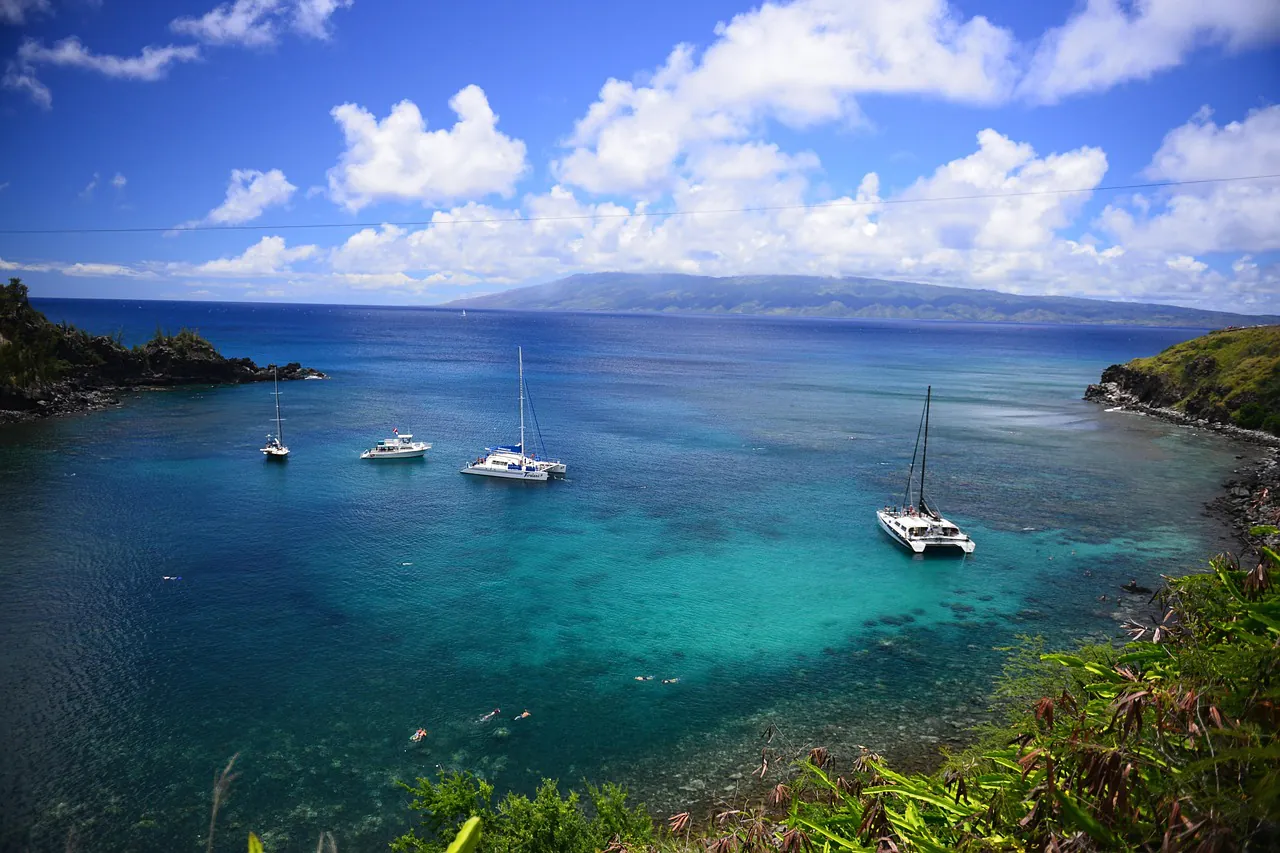
Ninety per cent of commercial snorkel traffic moors over Middle Reef, which runs 10 to 50 feet depending on where you drift. Tako Flats sits deeper and sandier at 20 to 80 feet, and the Enenue Side along the eastern corner holds the healthiest coral heads in the cove at 15 to 60 feet. All three are genuinely lovely. The catch is photographic: the crater floor slopes away fast, so a snorkeller floating at the surface above 40 feet of water sees colour drained out by distance and suspended light.
Regulars on r/MauiVisitors call it the “visually muted” problem, and they’re not wrong about what they saw. They’re wrong about why. Work the shallows instead and the same site looks completely different.
- Stay in 8 to 15 feet of water along the coral heads rather than drifting over open sand at 40 feet.
- Fin slowly and quietly. Molokini’s fish are habituated to people but they scatter from splashing and chasing.
- Look underneath ledges and inside coral heads, where squirrelfish, wrasse and eels actually live.
- Skip the surface sprint across the middle of the cove. The reef edge is where the life is.
- Water sits at 75–79°F (24–26°C) year-round, so a rash guard beats a wetsuit for most snorkellers.
Inner Cove vs. The Back Wall: Which One Are You Actually Booking?
The Inner Cove (Subzone A)
Sheltered from all but the worst swell, shallow enough for a nine-year-old, and reachable by every catamaran out of Maalaea. Expect 90 to 114-passenger vessels, a roped perimeter, and a maximum stay of 2.5 hours under HAR §13-257-3. Perfect for families; frustrating if you came for solitude.
The Back Wall
A sheer 300 to 360-foot vertical face on the outer rim, home to black coral, whitetip and grey reef sharks, and the occasional manta. Large Maalaea catamarans do not put snorkellers here, full stop. Only small-group rafts with it on the published itinerary, and even those run it only when the Alalakeiki Channel behaves.
If a booking agent tells you the catamaran “goes to the Back Wall”, ask for it in writing. Then book with someone else.
Visibility, Currents and the Trade-Wind Clock
Morning visibility at Molokini can hit 150 feet horizontally, and friends who dive it weekly still text me photos that look unreal. Then the trade winds arrive. By 11:00, gusts of 20 to 25+ knots are funnelling across the Maui isthmus, the channel turns choppy, and the same water that was glass at dawn takes on a churned, milky quality that halves your usable viz. This is why afternoon departures get diverted to Coral Gardens or Olowalu under the “weather permitting, Captain’s discretion” clause buried in every contract.
Currents are the other variable, and they’re serious at the outer zones. Reef’s End and the Back Wall can run sweeping drift conditions that are perfectly manageable with training and a live boat, and genuinely dangerous without one. Read our safety and shark facts guide before you commit to any outer-rim trip, especially if you’re a confident-but-untested swimmer.
Timing the Crowd: Three Quiet Windows
Between 8:00 and 10:30 AM, an average of 12 to 15 commercial vessels occupy the submerged moorings at once, putting 660 to over 1,100 passengers in the crater simultaneously. Surveys find 67% of visitors report feeling crowded by boat density alone. Beat it with timing rather than luck.
- The pre-armada dawn slot (6:15–7:45 AM). Kai Kanani’s Sunrise Deluxe Snorkel checks in at 5:45 AM at 108 Wailea Ike Drive, beach-loads at Maluaka Beach, and reaches the crater in about 15 minutes for $299 (€276). Island Style Diving / Maui Dreams Dive Co. ($269–$288.62 / €248–€266) checks in at 6:10 AM at the Kihei Boat Ramp as the first scuba boat in the water. Redline Rafting and Blue Water Rafting check in at 6:30 AM for 6:45–7:15 AM departures.
- The late-morning turnover hour (10:15–11:45 AM). Maalaea catamarans must vacate by 9:45–10:15 AM to reach Turtle Town, so the crater empties. Redline’s “Later Risers” 2-Hour Express runs $139 + tax (€128, check-in 9:00 AM), Makena Coast Charters’ 10:30 AM express starts at $99 (€91), and Blue Water’s 10:30 AM trip runs $132.30–$147 (€122–€135). One to three boats, and a crater that finally feels like a crater.
- Spatial separation on the outer rim. Even at peak, the Back Wall, the Enenue eastern corner and the Kanaio Coast sea caves stay near-empty, because 100-passenger catamarans physically can’t moor or drift-snorkel there.
One regulation worth knowing: under HAR §13-257-54, private recreational boats are barred from using vacant commercial day-use moorings during the 7:30–9:30 AM peak window. If you’re bringing your own hull, plan around it. Maalaea’s metered parking costs $1.00 per hour via licence-plate QR code through Secure Parking Hawaii. Buy six or seven hours, not five. Cars get towed while owners are still rinsing masks.
The crater is deep, clear and often empty of coral. The skill isn’t swimming further; it’s swimming shallower for longer.
Snorkel Zones vs. Scuba Zones: An Honest Skill Map
- Beginner and SNUBA: Middle Reef, at 10–50 feet, with an instructor and a roped line. This is where a first ocean swim should happen.
- Intermediate: Enenue Side and Tako Flats, 15–80 feet. Comfortable surface swimming, decent coral, easy boat pickup.
- Advanced drift: Reef’s End and the Back Wall. Live-boat diving, real current, no fixed mooring, and no margin for a panicking buddy.
- Technical depth: Shark Condos at 130 feet and Edge of the World at 150 feet before it falls to 250–300+ feet. Certification, redundancy and a serious logbook required.
What You Will Actually See: Reef Fish and Coral ID
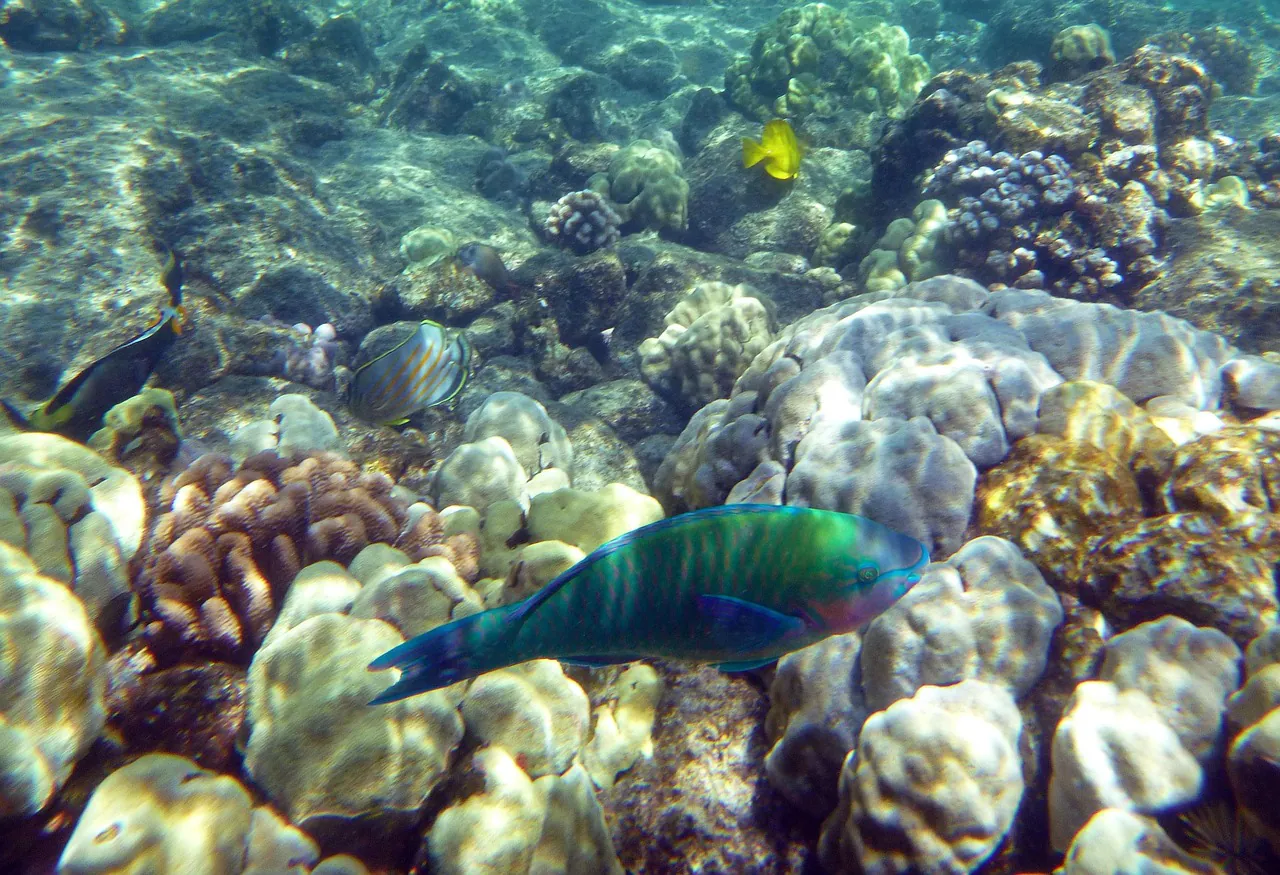
Fish life inside the MLCD is abundant and unusually approachable. Yellow tang shoals drift in loose yellow clouds over the coral heads. Black triggerfish, the humuhumunukunukuāpuaʻa of schoolroom fame, patrol the water column. Moorish idols appear in pairs, raccoon butterflyfish pick at coral polyps, and large rudderfish hang near the mooring lines like they own the place.
Coral, honestly, is the weak spot. Cauliflower and finger coral dominate, but a chunk of the inner crater bears scars from WWII-era explosive ordnance disposal work, and recovery has been slow. Few travellers realise how much of Molokini’s seabed story is a recovery story. Treat every coral head as fragile: no fin contact, no standing, no touching. Our reef etiquette guide covers the rest.
Turtles at Molokini: The Honest Truth
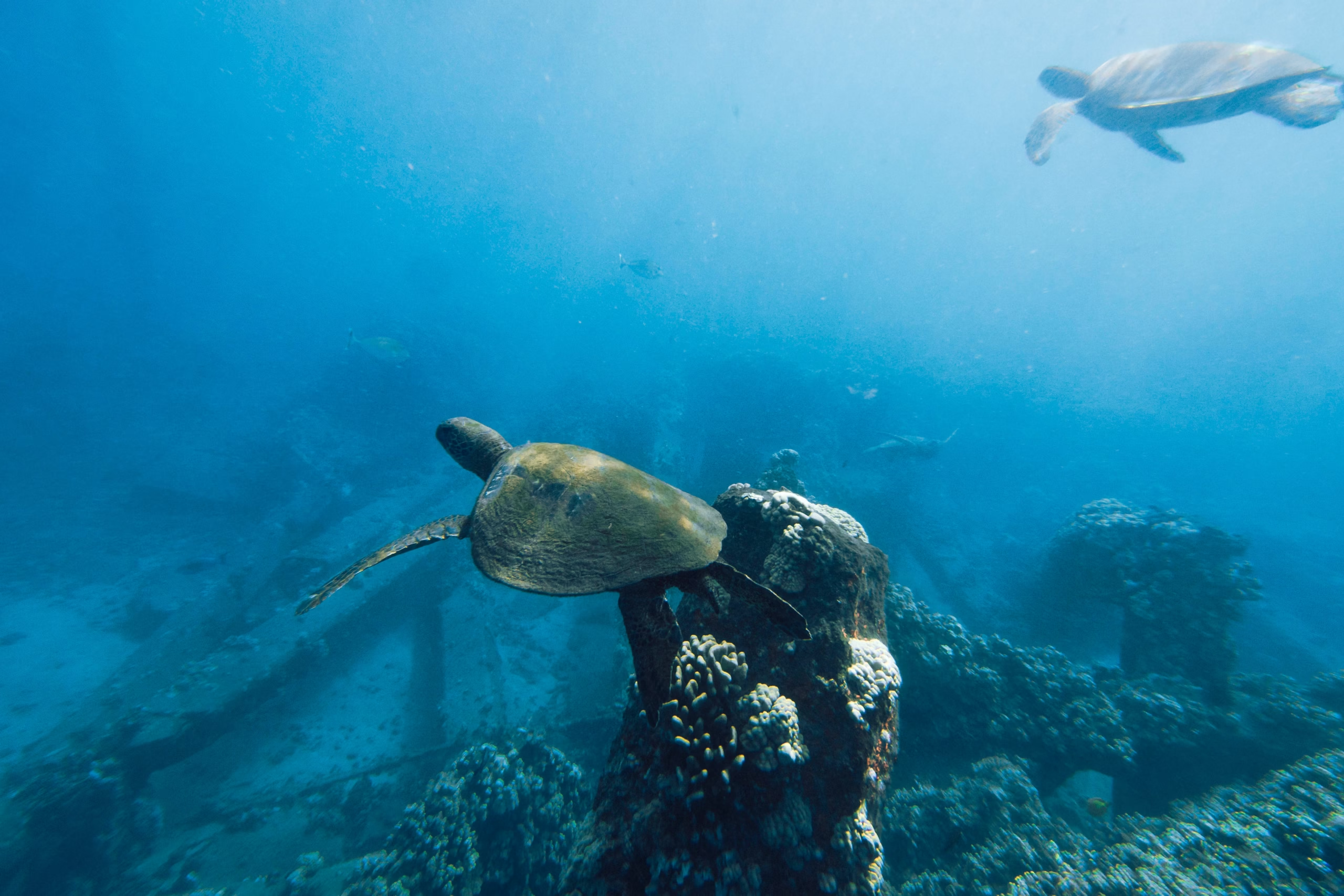
Does Molokini have turtles? Occasionally, yes, but it is not a turtle site and never has been. Honu need shallow limu pastures to graze, and the crater’s steep, coral-sparse floor doesn’t provide them. Anyone promising you guaranteed turtles at the crater is selling a photo, not a sighting. The turtles live at Turtle Town and Turtle Arches, which is why almost every Molokini tour is really a two-stop day.
If honu are your priority, our marine life and Turtle Town guide explains the combo structure, and it lists the free shore alternatives too: Maluaka, Makena Landing, Ulua and Kahekili all offer reliable encounters without a boat ticket.
Gear: Masks, Fins and the Full-Face Mask Ban
Two major operators, Trilogy Excursions and PacWhale Eco-Adventures, ban full-face snorkel masks outright, and they’re right to. CO2 build-up inside the enclosed volume plus unreliable valves have been linked to fatalities, including cases of rapid onset pulmonary edema. Bring a standard two-piece silicone mask with a dry snorkel, or use the boat’s kit.
| Gear option | Price | Where | Notes |
|---|---|---|---|
| Mask, snorkel and fins, 24 hrs | $9.50 (€8.70) | Auntie Snorkel, Kihei | Cheapest reliable set in South Maui |
| Mask, snorkel and fins, 24 hrs | $10.00 (€9.20) | The Snorkel Store | Several South Maui locations |
| Full set plus wetsuit top, per day | $25–$40 (€23–€37) | Resort kiosks and beach stands | Convenient, roughly triple the price |
| Prescription mask, per day | $15–$20 (€14–€18) | The Snorkel Store | Worth every cent if you wear glasses |
| Nitrox fill, two-tank dive | +$25 (€23) | Maui dive operators | Extends no-deco time on the Back Wall |
Sunscreen is law, not preference. Since 1 January 2022, Hawaii permits only mineral formulations containing zinc oxide or titanium dioxide; oxybenzone and octinoxate are banned statewide. Most boats carry compliant sunscreen on deck, but buying your own at a Kihei supermarket costs a fraction of the marina markup. See visitor rules and guidelines for the full regulatory picture.
Raft or Catamaran? Your Boat Changes Your Dive
Catamarans carry 90 to 114 passengers and snorkel inside a roped perimeter over the inner cove. They board from a ramp, serve food, suit families, nervous swimmers and anyone with limited mobility. If you want a relaxed half-day with a plate of pineapple in hand, that’s the right call.
Rafts hold 12 to 24 people, run faster, and can reach the Back Wall, the Enenue corner and the Kanaio sea caves. The trade-off is physical: you climb a vertical ladder in swell, and most operators prohibit pregnant passengers, anyone with recent surgery or chronic back and neck conditions, and passengers over 300 lbs (Makena Coast Charters applies 300 lbs; others 250 lbs). Board from the ramp at Maalaea if any of that applies to you.
Scuba Logistics: Certification, Two-Tank Dives and the 24-Month Rule
Certified divers have the better end of Molokini, and there are two routes: boats running two-tank trips from the Kihei Boat Ramp, or Maalaea-based day boats with a dedicated diver count. Island Style Diving / Maui Dreams, Prodiver and Maui Diamond all run professionally crewed trips capped at around 12 divers, which keeps the water civilised. Nitrox is usually an extra $25 (€23) and worth it on deeper profiles.
One rule catches out returning divers: if you haven’t logged a dive in more than 24 months, operators require a refresher shore dive before they’ll take you into open water. Book the refresher a day before your Molokini slot, not the morning of it. UNEXPLODED WWII ordnance also remains on the seabed around the crater; never touch a metallic cylinder or fin-shaped object, and follow the DLNR’s three Rs (recognise, retreat, report, calling 911 and the DOH HEER office).
So, Is Snorkeling Molokini Worth It?
Yes, with two conditions attached. Book a departure that reaches the crater before 8:00 AM or between 10:15 and 11:45 AM, and swim shallow rather than wide. Do those two things and the $99 to $309 (€91 to €285) buys you clarity, calm and a morning you’ll compare every other snorkel to for years. Skip them, book a cheap afternoon trip, and you’ll likely spend two hours bouncing toward Coral Gardens wondering what the fuss was about.
Compare live departure times and prices on our tickets and tours page, check harbour logistics on how to get to Molokini, then anchor it all around the best time of year for Maui snorkeling. Dawn or turnover hour. That’s the whole trick.