Safety at Molokini Crater: The Direct Answer
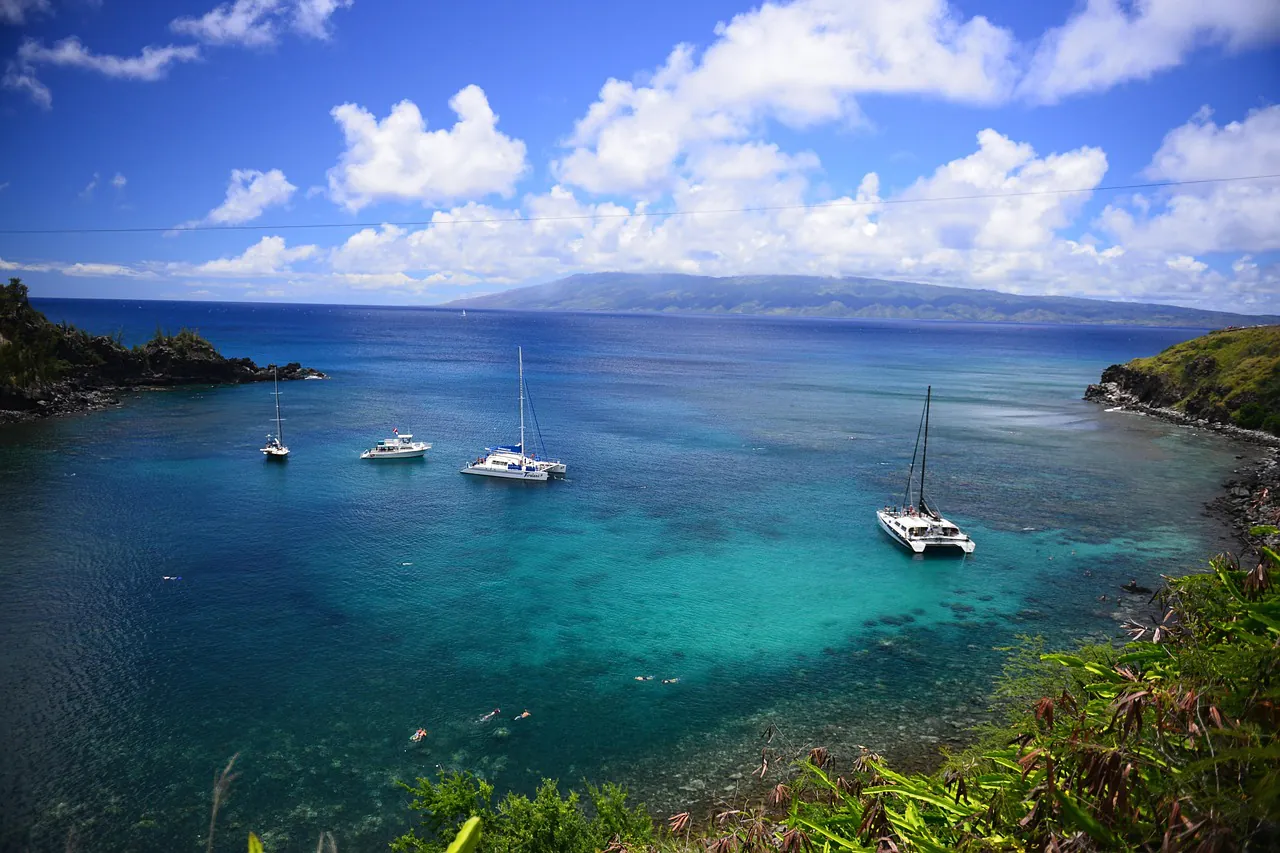
Snorkelling at Molokini Crater is safe enough that I’ve put my own mother in the water there, and she once described a hotel swimming pool as “a bit deep.” The inner cove is a submerged volcanic cone with no shorebreak, no rip dragging you sideways, and gin-clear water that regularly runs 100 to 150 feet (30 to 45 metres) of visibility. The shark question comes up in every safety briefing I’ve sat through, and it is statistically the least likely thing to ruin your morning.
What actually ends trips early is duller. Current outside the crater’s shelter, sun that turns a two-hour snorkel into a dehydration headache, seasickness on the channel crossing, and a pre-existing heart condition nobody flagged at check-in. Around 300,000 people visit this crater every year. The number who go home with a shark story is, as far as the record shows, zero.
Key Takeaways Before You Book
- Statutory entry fee: $0.00 (€0.00). There is no gate and no ticket booth at the Molokini Shoal Marine Life Conservation District. You pay for the boat, not the crater: $79.95 to $360.69 per person (roughly €74 to €333).
- Mooring is capped at 2.5 hours per vessel under Hawaii Administrative Rules §13-257-3, and overnight mooring is prohibited.
- Landing on the 23-acre islet is illegal without dual written permits from the US Coast Guard and Hawaii DOFAW. It is a seabird sanctuary, not a beach.
- Morning only, realistically. Trade winds hit 20 to 25+ knots after 11:00 AM, which is why every reputable operator front-loads the day.
- The inner cove is the safe zone. Reef’s End and the Back Wall are drift-only sites, and they are not beginner water.
How Dangerous Is Molokini Crater, Really?
Ranked honestly, shark risk sits at the bottom of the list. Hawaii averages roughly two to four unprovoked bites per year statewide against millions of ocean user-days, and the overwhelming majority of those happen in murky near-shore water, not in a clear offshore crater with 60 divers watching each other. The incidents that do fill Maui hospital beds come from somewhere else entirely.
- Snorkel-related drowning and ROPE. Rapid Onset Pulmonary Edema is the quiet killer in Hawaii snorkelling. It’s fluid build-up in the lungs triggered by cold water, exertion and age-related heart strain, and it presents as breathlessness that doesn’t improve when you stop swimming. If your chest feels tight in the water, surface, signal the crew, and get on deck.
- Alalakeiki Channel currents. The channel between Maui and Kaho’olawe funnels current hard, especially along the outer rim. Inside the cove you are protected. Outside it, you are not.
- Seasickness and dehydration. The crossing from Maalaea is 9.5 nautical miles of open water. Two hours of vomiting will end your snorkel faster than any fish.
- Boarding injuries. Raft tours load and unload via vertical ladders in swell. Knees, wrists and lower backs take the hit.
- UV exposure. You are on open water with zero shade over the reef and reflected glare from below. Two hours is enough to blister a fair-skinned back.
- Marine life. Triggerfish defending nests, moray eels in holes, urchins on rock. All avoidable with hands kept to yourself.
Shark Attack Reality in Hawaii and at Molokini
Molokini’s inner cove has no recorded fatal shark bite in its modern recreational era, and Hawaii as a whole averages roughly 2 to 4 unprovoked bites per year against millions of ocean user-days, with fatalities remaining rare. Those are the numbers to hold onto if you’re nervous. There is no baiting, no fish cleaning, no river mouth flushing sediment into the water, and no tiger shark territory. The crater is a rocky offshore cone in deep, clear, blue water, which is the opposite of the conditions where serious incidents cluster.
Not many visitors realise how much of Hawaii’s shark statistics come from a handful of specific situations: dawn and dusk swimming at murky river mouths, spearfishing with a catch bleeding on a stringer, and swimming alone at beaches next to turtle nesting grounds. Book a mid-morning boat from Kihei and none of those apply to you.
Inside the crater you’re floating above 10 to 35 feet of reef with a dozen other snorkellers in sight. That’s not shark habitat. That’s a swimming pool with fish in it.
Which Sharks You’ll Actually See at Molokini (And Why They Don’t Care About You)
You probably will see a shark, and it will be the highlight of your trip. Whitetip reef sharks rest in the sandy caves along the eastern rim near the site divers call Shark Condos, around 130 feet down. They are nocturnal hunters sleeping off the night shift, and they will not move for you unless you crowd them.
Grey reef sharks patrol the outer edges off Reef’s End and the Back Wall, typically 40 to 100 feet below the surface and mostly out of snorkeller range. Scalloped hammerheads turn up in shallow pupping habitat in spring, which is a genuine privilege to witness. Treat the whole lot as a dive-site feature rather than a hazard, and keep the 10-foot viewing distance you’d keep for a sea turtle.
Safety Risks, Real Probability, and Preventive Action
| Risk | Realistic Probability at Molokini | What Actually Prevents It |
|---|---|---|
| Unprovoked shark bite | Extremely low; no recorded fatal bite in the crater’s modern recreational era | Stay with the group, don’t carry bleeding catch, keep hands clear of resting whitetips |
| Current at Reef’s End / Back Wall | High for casual swimmers; these zones are drift-only | Remain in the inner cove unless you’re on a dedicated drift boat with a divemaster |
| ROPE or cardiac event | The leading serious incident category in Hawaii snorkelling | Honest medical self-check, snorkel vest, never snorkel alone, surface when breathless |
| Seasickness | Moderate to high on the 9.5-nautical-mile Maalaea crossing | Scopolamine patch the night before, light breakfast, sit aft, gaze at the horizon |
| Dehydration and sunburn | Near-certain without management | One litre of water per person per two hours, rash guard, reef-safe SPF 30+ |
| Boarding injury on raft ladders | Moderate on express raft tours | Choose ramp-boarded catamarans if you have back, neck or knee issues |
| Unexploded WWII ordnance | Low but genuine on the seabed around the crater | Never touch metallic cylinders or fins; follow the DLNR 3 R’s, Recognise, Retreat, Report to 911 and the DOH HEER Office on 808-586-5815 |
Maui Shark Months and Gear Myths Debunked
Hawaii’s historic peak for unprovoked bites runs September through November, so if you’re asking what month sharks are most active in Maui, October is the honest statistical answer. That said, the seasonal spike shows up in turbid near-shore water along the Kihei and Makena coast after heavy rain, where runoff clouds the visibility. It does not translate into elevated risk 2.5 to 9.5 miles offshore in a clear crater. Spring, roughly April to June, brings hammerhead pupping in shallow coastal shallows for the same reason: warm, murky, sheltered water with easy prey. The crater is none of those things.
The Colour Myth, and the Two Advisories That Are Real
Sharks are largely dichromatic, with limited colour discrimination and a retina tuned for contrast and movement rather than hue. The “yum yum yellow” legend traces back to 1970s US Navy survival-gear research and has been recycled ever since. So what colours not to wear in the ocean for sharks? Honestly, none of them matter in the way the internet claims. Yellow, neon green, black, white, none of it changes your odds meaningfully at Molokini.
- Skip reflective jewellery. Watches, bracelets and shiny earrings flash like baitfish scales when sunlight catches them underwater. This is the one accessory note worth following.
- Never swim with fish blood or a spearfishing catch. Blood and struggling fish generate the exact sensory signature sharks are built to detect.
- Menstruation is not a risk. No credible data supports the old caution, and operators do not restrict anyone on that basis.
- Urine is irrelevant. Human urine is not an attractant at any meaningful concentration in open ocean.
- Personal electronic deterrents are unproven. Shark-repelling wristbands and magnetic devices have no peer-reviewed field evidence behind them. Your buddy system is worth more.
- Black wetsuits are not seal costumes. The silhouette theory ignores how differently a 5’6″ snorkeller moves compared with a 300-pound monk seal.
Channel Currents, ROPE, and Physical Readiness
The Afternoon Wind Machine
Trade winds funnel across the Maui isthmus and accelerate through the Alalakeiki Channel after 11:00 AM, regularly hitting 20 to 25+ knots. That is why the Back Wall is a drift-only site requiring a dedicated drift boat and a divemaster who has read the current, and why Reef’s End is off-limits to casual swimmers. It is also why afternoon bookings get diverted. If your cheap 2:00 PM “Molokini” tour ends up at Coral Gardens instead, that’s the wind, and the fine print said the captain chooses the site. Check how the harbours and crossings work before you commit to a time slot.
ROPE: The Risk Nobody Talks About
Rapid Onset Pulmonary Edema kills snorkellers who look completely competent, most often men over 50, most often in the first 30 minutes. Cold water and exertion push blood into the lungs, and the symptom is breathlessness that doesn’t settle when you rest. Anyone with hypertension, an arrhythmia, or a heart murmur should get a doctor’s sign-off before boarding. Snorkelling is cardiovascular exercise, not floating. Get the full operator briefing expectations and sanctuary rules clear before you fly.
Operator Safety Records, Life Vests, and the Buddy Protocol
Every commercial operator running out of Maalaea or Kihei holds a USCG certification and carries a USCG-approved PFD for every person aboard. What varies wildly is passenger capacity, in-water supervision and crew ratio, and that difference is what you’re actually paying for. A 36-guest catamaran with two in-water lifeguards is a different safety proposition from a 100-plus passenger party boat where you’re a headcount rather than a person.
What to Check Before You Book
- Crew ratio and in-water supervision. Ask how many crew are in the water with snorkellers, not just on deck.
- Head counts, both ways. A proper operator counts you off the boat and counts you back on, by name or by wristband.
- Maximum passenger capacity. Small-group vessels like Kai Kanani and the high-speed rafts cap at 20 to 36 guests. Larger catamarans run 60 to 100+.
- Full-face mask policy. Trilogy Excursions and PacWhale Eco-Adventures both ban full-face snorkel masks aboard because of CO2 build-up and valve failures. Bring a standard two-piece silicone mask and a dry snorkel.
- Accessibility limits. Raft tours prohibit pregnant passengers, recent surgery, chronic back or neck conditions, and passengers over 300 lbs, and they require climbing vertical ladders. Beach-loading operators like Kai Kanani require barefoot wading through knee-deep surf.
- Weather cancellation policy in writing. Sites are chosen at the captain’s discretion. Know what refund, if any, you get when the crater is off the table.
Life Vests, Snorkel Vests and Flotation Belts: Not the Same Thing
Here’s the distinction that catches people out. A USCG-approved PFD is a life jacket: it floats an unconscious person face-up and is legally required for every passenger aboard, with children under 13 required to wear one on deck. The inflatable snorkel vests and neon flotation belts handed out by catamaran crews are buoyancy aids. They help you float horizontally and feel secure. They will not right you if you black out. If you’re a weak swimmer, a nervous first-timer, or over 60, ask for an actual life jacket. Nobody on the crew will think less of you, and I’ve watched a divemaster quietly hand one to a grown man who’d been boasting on the dock.
The Buddy Protocol, In Practice
Buddy pairs are assigned for a reason. Stay within 15 feet of your partner and inside the mooring line, look up every 30 seconds, and agree on two hand signals before you get wet: “okay” and “come get me.” Solo snorkelling at Molokini is not permitted on any commercial vessel I know, and it shouldn’t be. The reef inside the cove sits at 10 to 35 feet, which is shallow enough that you can always surface, look for the boat, and wave. Do that rather than swimming toward the rim, where the bottom drops away and the current picks up.
Local guide perspective: the safest thing you can do at Molokini is stay within 20 feet of your buddy and your boat’s mooring line. The reef inside the cove is only 10 to 35 feet deep. There is no reason on earth to swim toward the rim, and the crews watch that line more closely than they watch anything else.
Frequently Asked Questions About Molokini Safety
Is snorkeling at Molokini safe?
Yes. Molokini’s inner cove is one of the safest snorkel sites in Hawaii, with no shorebreak, no rip current inside the mooring line, and no recorded fatal shark bite in its modern recreational era. The genuine risks are ROPE and cardiac events among older snorkellers, current outside the shelter of the cone, sun exposure and seasickness on the crossing. Book a morning departure, wear a rash guard, hydrate, and stay inside the cove. First-timers should also read our Maui snorkelling safety primer for first-timers.
Do you see sharks at Molokini Crater, and is a shark attack likely?
You’ll likely see whitetip reef sharks resting in the caves along the eastern rim around 130 feet down, but a Molokini Crater shark attack is statistically negligible: Hawaii averages only 2 to 4 unprovoked bites per year statewide, and the crater has no recorded fatal bite in its modern recreational era. Whitetips are nocturnal hunters sleeping during your snorkel. Grey reef sharks stay on the outer walls, mostly 40 to 100 feet below snorkellers. Keep a 10-foot distance, don’t touch the seabed, and the encounter becomes the story you tell at dinner.
What month are sharks most active in Maui?
September through November is Hawaii’s historic peak for unprovoked incidents, with October the single most cited month, and April through June brings hammerhead pupping in shallow near-shore water. Both patterns concentrate in turbid, river-mouth-adjacent coastal water after rain, around Kihei, Makena and Sugar Beach at dawn or dusk. They do not translate to elevated risk at Molokini itself, which sits 2.5 to 9.5 miles offshore in clear, deep, blue water. If you’re visiting in autumn and nervous, a mid-morning crater trip is a far better choice than a dawn beach swim.
What colors not to wear in the ocean for sharks?
No colour reliably attracts sharks, because sharks are largely dichromatic with poor colour discrimination; the “yum yum yellow” idea comes from 1970s US Navy survival-gear research, not from field data on bites. The advice worth following is about shine and blood, not hue. Leave reflective jewellery, watches and shiny hair clips on shore, and never enter the water with a bleeding spearfishing catch or fish blood on your hands. Beyond that, wear whatever rash guard you like.
Can you snorkel Molokini Crater on your own?
No, not practically. Molokini has no shore access, no landing is permitted without dual written permits from the US Coast Guard and Hawaii DOFAW, and the crater lies 2.5 to 9.5 miles offshore across open channel. You either hold a private boat or book a permitted commercial operator, which runs $79.95 to $360.69 per person (roughly €74 to €333). Private recreational boats are also barred from vacant commercial day-use moorings during the 7:30 AM to 9:30 AM peak window under Hawaii Administrative Rules §13-257-54. See how to get to Molokini for harbour and parking logistics.
Do I need a life vest, and are the flotation belts enough?
A USCG-approved life jacket is legally required aboard for every passenger, but a snorkel vest or flotation belt is not a substitute for one. Flotation belts and inflatable snorkel vests keep you horizontal and comfortable; they will not turn an unconscious snorkeller face-up. Children under 13 must wear a life jacket on deck. If you’re a weak swimmer or over 60, ask the crew for a proper PFD, and consider reading our marine sanctuary rules and briefing expectations before you board.
Are full-face snorkel masks allowed at Molokini?
Not on Trilogy Excursions or PacWhale Eco-Adventures, both of which ban full-face masks aboard because of documented CO2 build-up and valve failure risk. Their concerns are well founded: the mask’s dead space traps exhaled carbon dioxide, and a failed valve can flood the whole unit at once. Bring or rent a standard two-piece silicone mask with a separate dry snorkel. If you wear a beard, shave the moustache line or use a mask with a good skirt seal, because a leaking mask leads to panic far more often than any marine animal does.
When should I skip the trip for my own safety?
Stay ashore if you’re pregnant, less than 24 hours post-dive, recovering from recent surgery, or managing uncontrolled high blood pressure or a heart arrhythmia, because raft operators prohibit these outright and catamaran crews will advise against them. Also skip it in a small-craft advisory, when the channel forecast tops 25 knots, or if you’ve been vomiting since Maalaea. Operators divert to sheltered coastal sites rather than cancel, so you may still get wet, just not at the crater. The planning hub covers timing and what to pack if you want to hedge your dates.